
If money seems to disappear between paychecks, even in months when you don’t buy anything big, a no spend challenge is one of the simplest ways to find out where it goes. You stop buying extras for 30 days, keep paying for what you actually need, and watch what happens.
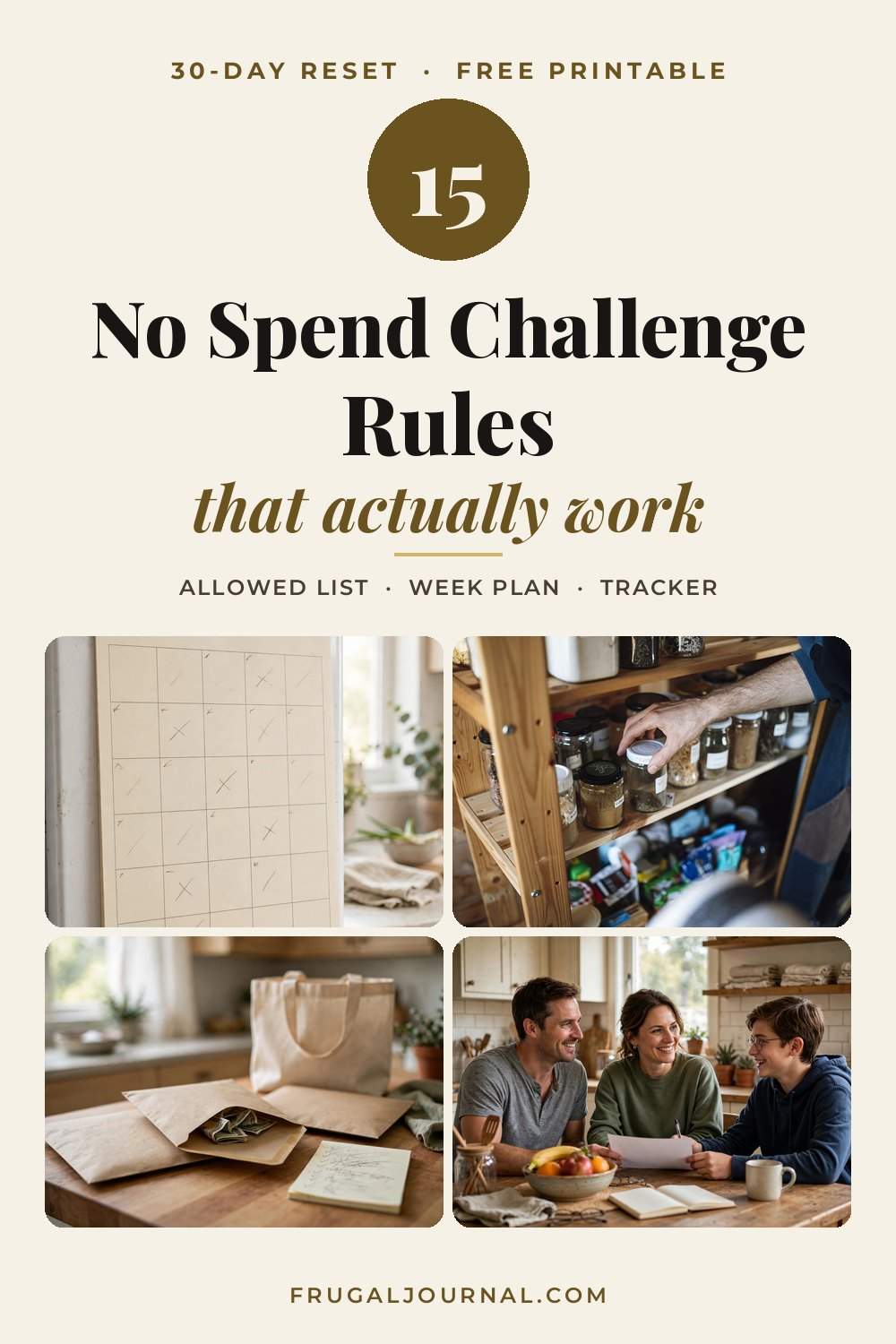
This post is for anyone who wants a reset without cutting essentials or rebuilding a whole budget. You’ll get 15 rules, a clear list of what’s allowed and what isn’t, a one-weekend prep plan, a week-by-week guide and a free printable tracker. Set your exceptions before day one and the no spend challenge will fit your real life, not someone else’s.
What Is a No Spend Challenge?
For 30 days you pay only for essentials: housing, utilities, insurance, basic groceries, getting to work and needed medicine. Clothes, decor, takeout, hobby supplies and impulse buys wait until the month is over. It isn’t meant as a punishment. The point is to interrupt the spending you do on autopilot and notice what you actually miss.
It helps to know the cousins. A low spend challenge gives you a small budget for wants instead of zero. A spending freeze is usually shorter, a weekend or a week, and often targets one habit.
It works best if you shop when you’re bored, buy sale items you didn’t plan on, or lose track of small purchases. Skip the strict version if you’re already cutting essentials to get by, or if medical, work or family needs make your spending hard to predict. In that case, pause just one category, like takeout or online shopping, and still use the tracker.
New to this? No Spend Challenge for Beginners: A Simple 30 Day Plan walks through a gentler first month.
What’s Allowed (and What’s Not)
Always allowed. Rent or mortgage, utilities, insurance, basic groceries, gas or transit fare, prescriptions and co-pays. Also anything your kids truly need right now, like a required school supply or shoes they’ve outgrown, plus pet food and vet care that can’t wait. A simple test: if skipping it would hurt your health, safety, job or housing, it’s essential.
Not allowed. New clothes and shoes, makeup, decor, books, games, hobby supplies, takeout, coffee runs, delivery and stocking up because something is on sale. If it isn’t essential and it isn’t on your written exception list, it waits until day 31.
Planned exceptions. Before day one, write down anything you already know is coming: a birthday gift, a haircut, a work lunch you can’t skip. Give each one a dollar limit. Anything you add halfway through the month because you want it isn’t an exception. It’s a purchase.
Gray areas. Subscriptions count as spending, so pause what you can. A family dinner out goes on the exception list with a limit, or gets swapped for a meal at home. When you’re unsure, ask one question: would waiting 30 days cause a real problem? If not, wait.
How to Prep in One Weekend
 Save
📌 Save this for later on Pinterest
Do a 15-minute spending audit. Open last month’s bank and card statements and circle everything that wasn’t essential. The stores and apps that keep showing up are where your rules need to be strictest.
Write your two lists. Allowed on one side, not allowed on the other, with your planned exceptions underneath. Put them on the fridge or in your phone notes, wherever you’ll see them when you’re tempted.
Clear the path. Plan the first week of meals from what you already have, delete shopping apps, unsubscribe from store emails and log out of saved cards. Then print the tracker and fill in your dates.
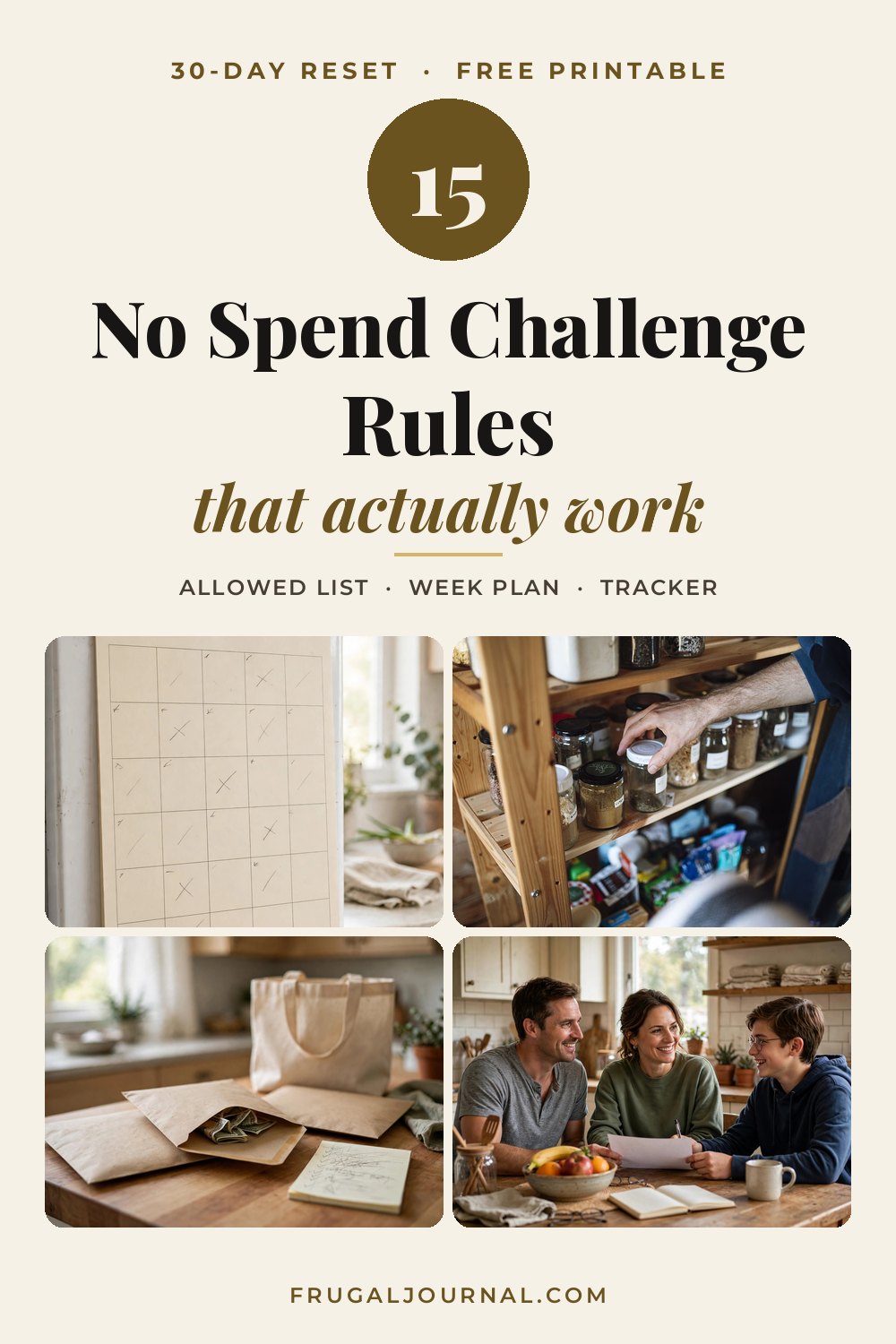
Free printable: Download the 30-day no spend challenge tracker (PDF, 1 page). It has a box for each day, your goal and your why, plus space for your allowed list, planned exceptions, a 72-hour waitlist and an after-challenge list.
15 No Spend Challenge Rules That Actually Work
Rules 1 to 3 set the frame, 4 to 10 handle daily pressure, and 11 to 15 keep you going when the month gets long.
Rule 1: Pick a Clear Why and a Dollar Goal
Write one sentence about why you’re doing this and one dollar amount you’d like to free up, and put both at the top of your tracker. “Build a $300 starter emergency fund” is easier to protect than “spend less.” When you’re about to tap Buy, read it first.
Rule 2: Set a Hard Start and End Date
Put both dates on the calendar. A challenge with no end feels endless. Thirty days is short enough that “not now” feels doable.
Rule 3: No Renegotiating the Rules Mid-Month
The list you wrote on a calm weekend is smarter than the one you’d write while staring at a sale. If a real need comes up, add it as a written exception with a limit and a reason. Don’t quietly move things from “not allowed” to “allowed.”
Rule 4: Get Your Whole Household on Board
 Save
Before day one, tell everyone who shares your money: a partner, a roommate you split groceries with, older kids who come shopping with you. Explain what’s paused, what’s still fine and why you’re doing it. If one person keeps ordering takeout while another is trying to hold the line, the challenge will feel unfair and probably end early.
Everyone doesn’t need the exact same list, but you do need to agree on shared spending. Decide together how you’ll handle invitations, school costs and family meals. A shared plan means support instead of the same argument every few days.
Rule 5: Meal Plan and Shop Your Pantry First
 Save
Start with food you already own. Go through the pantry, fridge and freezer and write down full meals you can make without a store trip. Then plan the month around those meals, filling the gaps with basic ingredients only.
Food is where a no spend month is usually won or lost, because it’s the biggest flexible cost for most households and the place where small trips add up. A quick stop for milk turns into snacks, drinks and something for dinner because nobody planned dinner. With a meal plan, you shop less often, waste less and have an answer ready when takeout starts sounding good at 6 p.m. Keep three or four “nothing in the house” meals you can always make, like pasta, eggs on toast or rice and beans.
Rule 6: Pause the Subscriptions You Forgot You Had
Scroll your statement for anything recurring. Pause what you can, cancel free trials before they bill and keep only what you need for work, school or staying in touch.
Rule 7: Delete Shopping Apps and Sale Emails for 30 Days
You can reinstall them later. Removing the prompt is much easier than resisting it every evening.
Rule 8: Use the 72-Hour Waitlist for Every Want
 Save
Every time you want something, write it on a waitlist with the price and the date. Then wait 72 hours. Don’t leave it in a cart, don’t keep the tab open and don’t check whether the price dropped.
After three days, a lot of items just don’t feel urgent anymore. The ones that still matter move to your after-challenge list. This rule works because it doesn’t ask for willpower in the moment. It just buys time for the first rush to fade, so the decision is based on whether you still want the thing, not on how good it looked in an ad or a store display.
Rule 9: Pay for Essentials in Cash If You Tend to Overspend
 Save
If card spending is hard for you to feel, take out a set amount of cash for groceries each week. When the envelope is empty, you cook from the pantry until next week. Cash makes a small purchase feel like a decision again.
Rule 10: Plan Free Fun in Advance
 Save
Boredom leads to browsing, and browsing leads to buying. So plan free things before the month starts: walks, library books and movies, parks, free museum days, board games, a potluck at home, baking with what’s in the pantry.
Put two or three on the calendar each week, especially on weekends, which is when a lot of us spend without thinking. When there’s already a plan, you don’t go searching for something to do, and that search is often where the spending starts. Many libraries also lend more than books, so check what yours offers early in the month.
 Save
Rule 11: No “Just This Once” Without a Swap
Small, on sale and limited-time are not reasons. If you must buy something unplanned, cut the same amount from a planned exception.
Rule 12: Track Spending Every Day
 Save
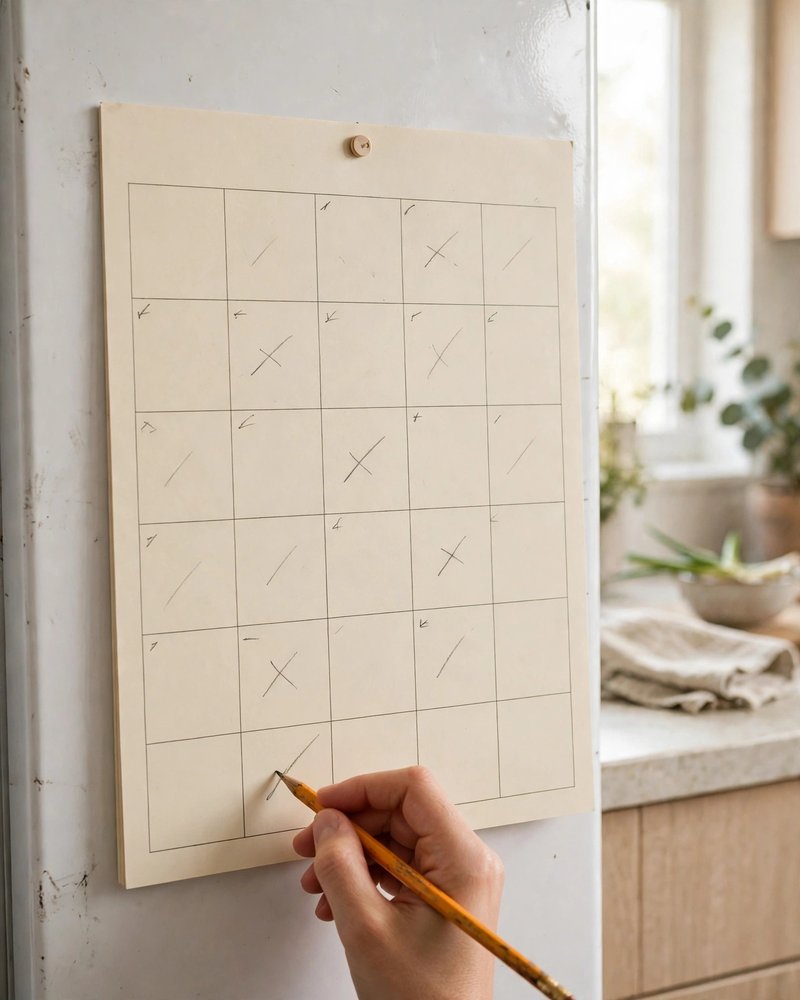
Mark every day on the tracker, including the days you spend nothing. Write the date, anything you paid for and whether it was essential, a planned exception or a slip. It takes a couple of minutes.
Without tracking, it’s easy to forget a coffee, a snack or a $2.99 app and feel like the month went perfectly. With tracking, you can see patterns by week two and fix them before a small slip becomes a habit. At the end of the month, that sheet is your record of what you saved and what you didn’t miss.
Rule 13: Do a Weekly Fridge and Pantry Reset
 Save
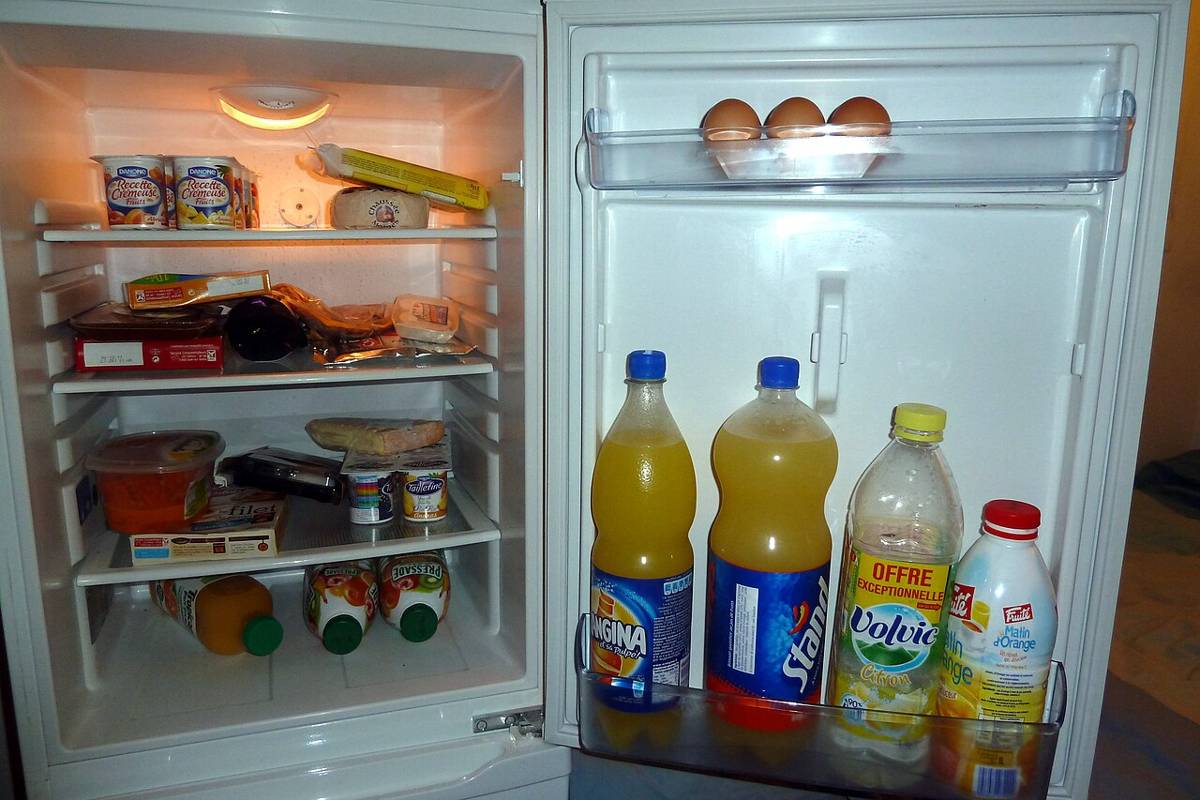
Once a week, cook whatever is close to expiring first and plan the next few days around it.
Rule 14: Park It on a List, Don’t Buy It Yet
Wants that survive the 72-hour wait go on the after-challenge list, which you review with a clear head on day 31.
Rule 15: A Slip-Up Means Restart Tomorrow, Not Next Month
If you break a rule, don’t quit and don’t push the restart to next month. Write down what happened and why, then go back to the rules the next morning. One purchase doesn’t erase 10, 15 or 20 days of paused spending. Quitting after a slip does erase the rest of the month.
The goal is to change habits, not to be perfect. Treat a slip as information, fix the trigger if you can and keep going.
Your 30-Day Week-by-Week Plan
Week 1 (days 1–7): detox and reset. Do your first grocery shop from the pantry plan. Expect the urge to browse in the evenings and swap it for something already on the calendar.
Week 2 (days 8–14): new routines. Repeat simple breakfasts and lunches, review the tracker for patterns and pause any subscription you missed. Around day 10 the novelty wears off. Reread your why and focus on finishing the week, not the month.
Week 3 (days 15–21): the hard middle. Social plans, sales and boredom pile up. Lean on the waitlist and suggest a walk, a park visit or dinner at home when friends want to go out. If you do go, set a limit before you leave.
Week 4 (days 22–30): finish strong. Cook down the pantry, update your after-challenge list and decide which habits you want to keep.
What to Do After the Challenge Ends
 Save
Add up what you spent on essentials and exceptions and compare it with a normal month, then move the difference to its job right away: an emergency fund, a debt payment or a sinking fund for a known cost like car repairs. If it sits in checking, it tends to drift back into spending.
Keep the habits that felt easy and drop the ones that made life harder. Don’t buy everything on your after-challenge list in the first week. Pick one or two items, wait a week and review again.
If the month felt too strict, try a low spend month next. If it felt manageable, repeat it in a few months.
No Spend Challenge FAQs
What are the rules of a no spend challenge?
For a set period, usually 30 days, you pay for essentials only. You write your allowed list and planned exceptions before day one, pause wants and impulse buys, track spending daily and put anything you want on a waitlist for after the challenge.
What can you buy during a no spend month?
Housing, utilities, insurance, basic groceries, transportation, medicine and other true essentials. You can also buy anything on your written exception list, as long as it stays within the limit you set.
Does a no spend challenge actually save money?
It can, as long as you move what you didn’t spend to a clear goal. The savings come from paused wants, not from skipping essentials. Your tracker will show what it was worth for your household.
How do you do a no spend challenge with kids?
Use a family version of the list. Keep food, health needs, required school costs and replacements for clothes or shoes your child has outgrown as essentials. Explain the pause in simple terms, let kids help choose free activities and plan exceptions ahead for birthdays or school events.
Start Your No Spend Challenge
Pick a start date you can commit to, print the tracker and write your allowed list today. Use the 15 rules as your guide and the week-by-week plan when motivation dips. In 30 days you’ll know what you miss, what you don’t and how much room there really is in your budget.
Download the free no spend challenge tracker (PDF)
This post is general information, not financial advice.
Photo credits via Wikimedia Commons: Shixart1985 (CC BY 2.0), Asturio Cantabrio (CC BY-SA 4.0), Free Images (CC BY 2.0); Bretwa and Fons Heijnsbroek (CC0). Other images were created for Frugal Journal.
2 thoughts on “30-Day No Spend Challenge: 15 Rules That Actually Work (Free Printable Plan)”